
It’s easy to mix up two words that look almost the same. Principle vs principal often causes confusion because both have similar spelling and sound alike. Yet, their meanings are quite different. One describes an important person or thing, while the other refers to a rule, belief, or basic truth.
The good news? You can learn the difference quickly. This guide breaks down each word in simple English. You’ll see clear meanings, everyday examples, common mistakes, and an easy memory trick. By the end, choosing the correct word will feel much easier.
Table of Contents
TogglePrincipal vs Principle: What’s the Difference?
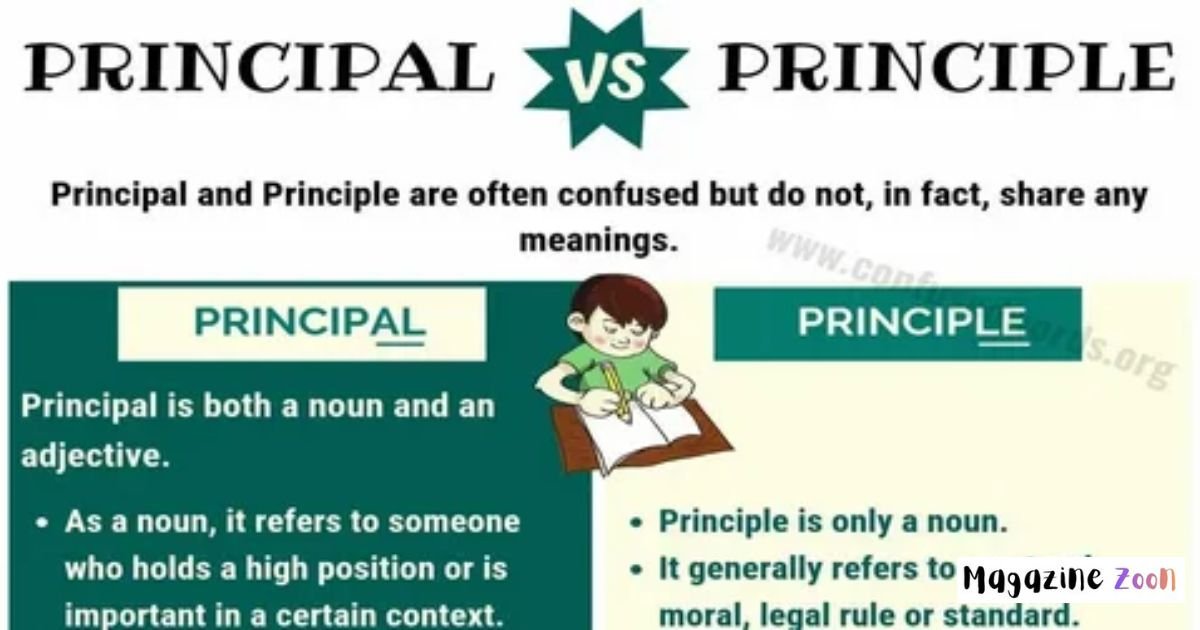
The principle vs principal confusion usually comes from their similar spelling. However, these words have different meanings and grammatical roles.
Principal can work as both a noun and an adjective. It often describes someone in charge or something that matters most.
Principle works as a noun. It describes a basic rule, belief, or fundamental truth that guides behavior or decisions.
| Word | Main meaning | Example |
|---|---|---|
| Principal | Main, most important, or person in charge | The school principal spoke to us. |
| Principle | Rule, belief, or fundamental truth | Honesty is an important principle. |
A quick way to remember them is simple:
- Principal = person or something most important
- Principle = rule or belief
- Principal can be an adjective or noun.
- Principle is a noun.
Conversation example:
Sam: “Is the school principle coming today?”
Mia: “Almost! It’s the school principal. A principle is a rule or belief.”
That small difference can prevent many spelling and grammar mistakes.
What Does Principal Mean?
The principal definition changes slightly depending on how you use the word. As a noun, principal can describe a person in a leading position.
For example, a school principal manages an educational institution. The word can also describe someone with controlling authority or a person who plays an important role.
As an adjective, principal means “most important” or “main.” This meaning often appears before another noun.
- School principal: The principal welcomed the new students.
- Principal ingredient: Rice is the principal ingredient in this dish.
- Principal occupation: Teaching became her principal occupation.
- Principal reason: Cost was the principal reason for the change.
- Principal investment: The investor protected the principal investment.
In finance, principal has another important meaning. It can refer to the original capital sum placed into an account or borrowed through a loan. Interest gets calculated separately from that principal amount.
Conversation example:
Ali: “What does principal mean here?”
Sara: “It means the main amount of money, before interest.”
So, your principal meaning depends on the context. Look at the surrounding words before choosing its usage.
What Does Principle Mean?
The principle definition is easier to remember once you connect it with rules and beliefs. Principle is a noun that describes a fundamental truth, governing law, or personal belief.
It can describe an idea that guides someone’s behavior, choices, or activities. For example, honesty, fairness, and respect can represent moral principles.
A principle may also describe a basic idea behind how something works. In this sense, it refers to an underlying or basic quality rather than a person.
Common uses include:
- Personal principles: She follows strong personal principles.
- Moral principles: He believes in treating everyone fairly.
- Governing law: The principle explains how the system works.
- Fundamental truth: The principle remains useful in many situations.
- Code of conduct: The organization follows clear principles.
Conversation example:
Nina: “Why did you refuse the offer?”
Omar: “It went against my principles.”
Here, principles means personal beliefs or standards. It doesn’t describe a person or something that ranks as most important.
Remember this simple connection: principle and rule both relate to guidelines or beliefs. That makes the spelling easier to recall.
Principal vs Principle Examples in Sentences
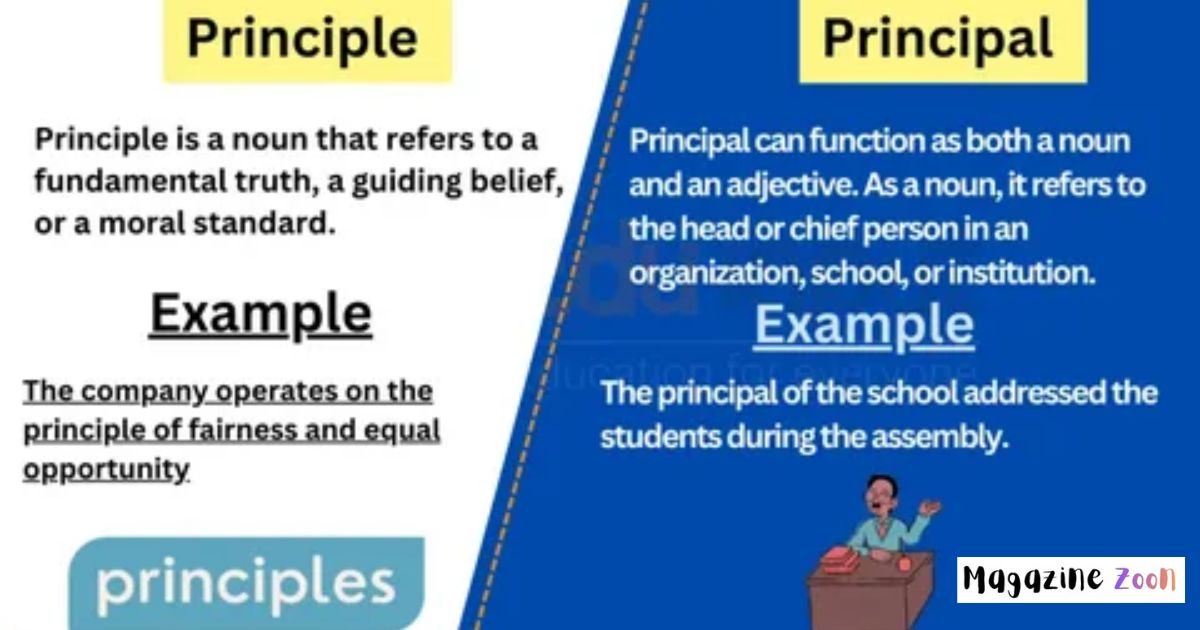
Seeing both words side by side makes the principal vs principle distinction much clearer. The spelling differs by only one letter, but the meaning changes completely.
Consider these examples:
- The principal called a meeting after school.
- Respect is an important principle in our family.
- Safety is the principal concern at the factory.
- She refused to break her principles for money.
- The principal amount on the loan was $10,000.
- The principal ingredient is fresh tomato.
- Fairness is one of his strongest personal principles.
- The teacher sent the student to the school principal.
Here’s a quick conversation:
Tom: “Honesty is my principal.”
Jake: “You mean principle. Honesty is a belief or value.”
Tom: “Right. The principal called me yesterday, though.”
That example shows why these are commonly confused words. Their different spellings reflect different word meanings and parts of speech.
When checking your sentence, ask one question: Are you talking about a person/main thing or a rule/belief?
If it’s a person or something most important, choose principal. If it’s a rule, belief, or fundamental idea, choose principle.
Is It Principal Amount or Principle Amount?
The correct phrase is principal amount. In finance, principal refers to the original amount of money you borrow, invest, or deposit.
For example, if you take a $10,000 loan, the $10,000 starts as the principal. The lender then charges interest based on the loan terms.
The word principle doesn’t fit this meaning. A principle describes a rule, belief, or fundamental truth. It doesn’t describe money borrowed or invested.
- Correct: I paid part of the principal amount.
- Incorrect: I paid part of the principle amount.
- Correct: The loan has a $5,000 principal balance.
- Incorrect: The loan has a $5,000 principle balance.
Conversation example:
Mark: “Should I write principal amount or principle amount?”
Lisa: “Use principal amount when you’re talking about money.”
So, when discussing principal amount in finance, think about the original capital. Interest comes separately.
How to Use Principal and Principle Correctly
Understanding the principle vs principal difference becomes easier when you focus on context. Ask yourself what the word describes before writing it.
Use principal when you mean the main or most important thing. You can also use it for a person in a leading position.
Use principle when you mean a rule, belief, standard, or basic truth.
- Principal: The school principal greeted the parents.
- Principal: Safety is our principal concern.
- Principal: She repaid the principal amount.
- Principle: Honesty is an important principle.
- Principle: The decision went against his principles.
- Principle: The machine works on a simple principle.
Conversation example:
Emma: “Which word should I use for a personal belief?”
Jack: “Use principle because it means a rule or belief.”
This simple word distinction can improve your English grammar and everyday word usage. Always check the meaning first. Then choose the spelling that matches it.
Common Mistakes With Principal and Principle
Many writers make the same mistake because these commonly confused words look and sound similar. Their spelling may seem tricky, but their meanings give you a useful clue.
One common mistake involves a school leader. People sometimes write “school principle.” The correct phrase is school principal.
Another frequent error appears in financial writing. Writers may use “principle amount” instead of principal amount.
Watch for these examples:
- ❌ The school principle called my parents.
- ✅ The school principal called my parents.
- ❌ I need to pay the principle amount.
- ✅ I need to pay the principal amount.
- ❌ Kindness is an important principal.
- ✅ Kindness is an important principle.
Conversation example:
Ben: “My school principle gave us new rules.”
Amy: “The person is the principal. The rules are principles.”
These small spelling mistakes can change your meaning. However, you can avoid most errors by remembering whether you’re describing a person, something important, or a rule.
How to Remember the Difference Between Principal and Principle
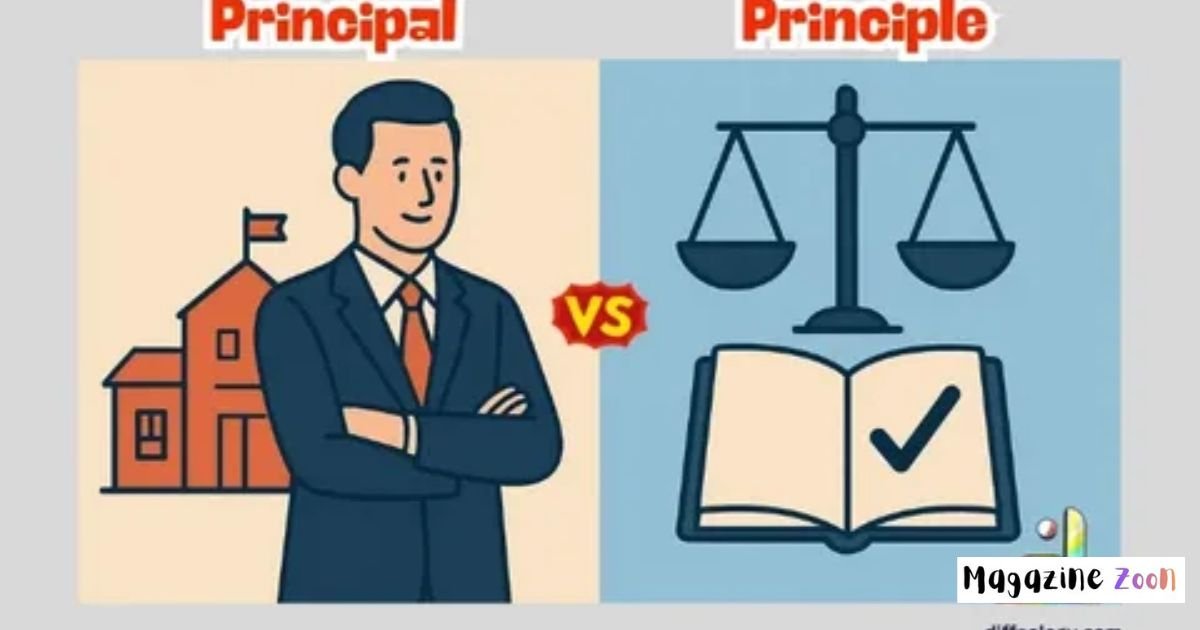
A good memory trick can make this confusing pair much easier. You don’t need to memorize a complicated grammar rule.
Try the classic phrase: “The principal is my pal.” The word pal helps you remember that a principal can be a person, especially a school leader.
For principle, connect the ending -le with the word rule. Both words relate to rules, standards, or beliefs.
Keep these reminders handy:
- Principal = person
- Principal = primary or most important
- Principal = money originally borrowed or invested
- Principle = rule
- Principle = belief
- Principle = basic or fundamental truth
Conversation example:
Ryan: “I always forget which one means a rule.”
Maya: “Think principle = rule. Think principal = pal.”
There’s another useful clue. Principal has an “a,” just like adjective. That reminds you that principal can work as an adjective as well as a noun.
Once you remember the difference, the two words become much less confusing.
Principal vs Principle: Quick Comparison Table
The principle vs principal difference becomes much easier when you see both words together. They look almost identical, yet their meanings and uses are quite different.
| Feature | Principal | Principle |
|---|---|---|
| Part of speech | Noun and adjective | Noun |
| Main meaning | Most important, main, or person in charge | Rule, belief, or fundamental truth |
| Person | A school principal or leader | Not normally used for a person |
| Money | Principal amount or original capital | Not used for money |
| Example | The principal called a meeting. | Honesty is a strong principle. |
| Memory clue | Principal is my pal | Principle relates to rule |
Principal can describe a person in a leading position, such as a school principal. It can also describe something most important or a capital sum.
Principle usually refers to a rule, standard, belief, or basic idea. It can guide someone’s behavior or explain how something works.
Quick check:
If you mean a person or something most important, use principal. If you mean a rule or belief, use principle.
- Read More: Raksha Bandhan Captions for Instagram
- Read More: What Does ISK Mean in Text
FAQs About Principal vs Principle
What is the difference between principal and principle?
Principal can mean the main or most important thing. It can also mean a person who holds a leading position.
Principle means a rule, belief, standard, or fundamental truth. It functions only as a noun.
Example:
“The school principal spoke about the importance of moral principles.”
Here, principal refers to a person. Principles refers to beliefs or standards.
Is it principal amount or principle amount?
The correct phrase is principal amount. It refers to the original amount of money borrowed, invested, or deposited.
Example: “She paid $500 toward the principal amount.”
Is it school principal or school principle?
The correct phrase is school principal. A principal is the person who leads a school or educational institution.
Can principal be an adjective?
Yes. Principal can work as both a noun and an adjective.
For example, “The principal reason was cost.” Here, principal means the most important reason.
Can principle be an adjective?
No. Principle is a noun. Its related adjective is principled.
Example: “She is a principled person who follows her values.”
What is an easy way to remember principal and principle?
Try this memory trick: “The principal is my pal.”
For principle, connect the word with rule. Both can relate to standards or guidelines.
What are common mistakes with these words?
People often write “school principle” or “principle amount.” Both are incorrect in those contexts.
Remember:
- School principal = person
- Principal amount = money
- Moral principle = belief or rule
- Principal reason = most important reason
Once you connect each spelling with its meaning, these commonly confused words become much easier to use.
Conclusion
Mixing up these two words is common, but the difference is simple once you know what each one means. Principal can describe a person in charge, something most important, or the original amount of money. Principle refers to a rule, belief, standard, or basic truth. The context usually gives you the answer. If you’re talking about a school leader, choose principal. If you mean a personal belief, choose principle.
A simple memory trick can help you avoid future mistakes. Remember, “the principal is my pal.” For principle, think about a rule or guiding belief. Pay attention to spelling and sentence usage when writing. With a little practice, you’ll quickly recognize which word fits. These small details can make your English clearer and help you write with greater confidence in everyday situations.

Discover engaging stories, insightful articles, latest trends, useful guides, and fresh perspectives across topics that matter to you.